
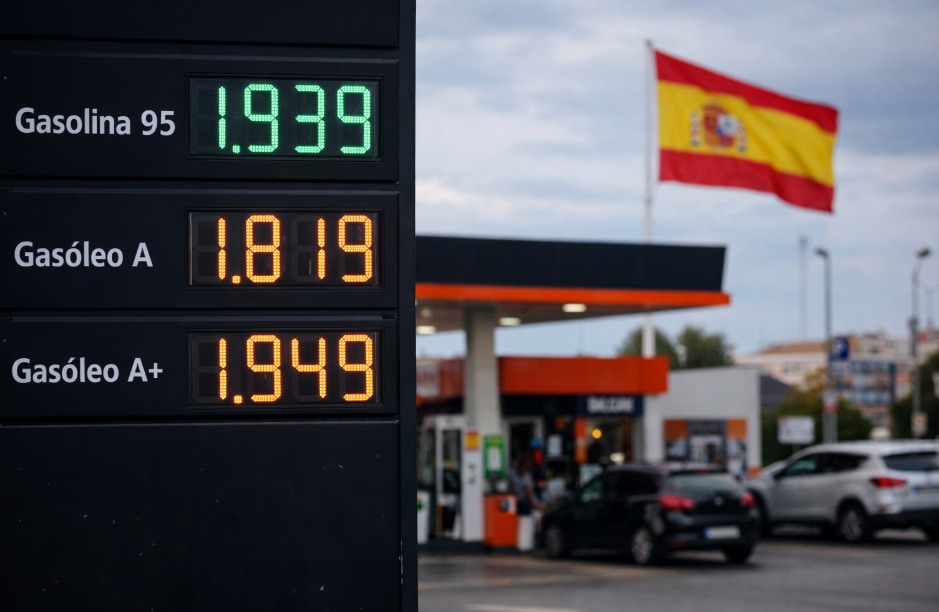
Understanding the “Rocket and Feather Effect” at Gas Stations
Fuel prices across Europe have surged in recent weeks following geopolitical tensions and volatility in global oil markets. But the increase has not been uniform across the continent.
According to the European Commission’s latest Petroleum Bulletin, Spain is among the countries where motorists have felt the sharpest rise at the pump since the escalation of the war in Ukraine. The trend highlights a well-known economic phenomenon often referred to as the “rocket and feather effect,” where fuel prices climb quickly when crude oil rises but fall slowly when it drops.
For Canadian readers accustomed to fluctuations in gasoline prices tied to global crude markets and regional supply chains, the situation in Spain illustrates how market structure and competition can significantly influence what drivers ultimately pay at the pump.
Spain Among the EU Countries With the Largest Fuel Price Increases
Recent data show that Spain has recorded one of the biggest increases in gasoline prices in the European Union since the week before the conflict began.
The price of 95-octane gasoline in Spain has risen by about 21 euro cents per litre, compared with an average increase of 15 cents across the EU.
In neighbouring countries, the increase has been more moderate:
- Italy: about 12 cents per litre
- France: around 11 cents per litre
- Portugal: roughly 8 cents per litre
The pattern is similar for diesel. In Spain, the price of diesel has climbed by about 30 cents per litre, while the EU average increase stands at roughly 27 cents.
These figures cover the period between the week before the war began and the following Monday, when global oil prices surged to nearly US$120 per barrel. Since then, crude prices have largely remained above US$100 per barrel, leaving uncertainty about how much more the increases could affect consumers.
Why Fuel Prices Rise Faster in Spain
Lower Starting Prices Before the Surge
One reason Spain has experienced a steeper increase is that fuel prices were initially lower than the European average before the latest surge.
When global oil prices jump, countries with lower starting prices often experience larger apparent increases, as prices move closer to the regional average.
However, economists say this factor alone does not fully explain the difference.
A Highly Concentrated Fuel Market
Experts point to the structure of Spain’s fuel market as a key factor behind the rapid increase.
According to data from Spain’s competition regulator, the National Commission on Markets and Competition (CNMC), about 55 per cent of gas stations in the country are controlled by just five major operators:
- Repsol
- Cepsa
- BP
- Galp
- Shell
This level of concentration is higher than in many other European countries, where independent retailers play a larger role.
In addition, the wholesale fuel market, where gas stations purchase gasoline and diesel, is also relatively concentrated. With fewer competitors in both distribution and supply, there is less downward pressure on prices when oil costs fluctuate.
Competition Plays a Key Role
Antoni Cunyat, an economics professor at the University of Valencia, says the limited competition in Spain’s fuel market helps explain the speed at which price increases reach consumers.
“The most important factor is the lack of competition in the fuel market. We consistently see gasoline prices rise much faster than crude oil itself,” Cunyat explains.
When crude prices rise, retailers tend to pass those costs on to consumers almost immediately. But when oil prices fall, the decline at the pump is much slower.
Statistical Differences Between Countries
Another factor that may exaggerate the difference between Spain and some neighbouring countries is how fuel prices are reported.
In Spain, official statistics do not always include promotional discounts offered directly at the pump.
In contrast, countries such as Germany and France often include those discounts in their reported figures, which can make their official fuel price increases appear smaller.
The “Rocket and Feather” Effect Explained
Economists describe the pattern seen in fuel pricing as the “rocket and feather effect.”
When crude oil prices rise, gasoline prices increase rapidly — like a rocket launching upward.
But when oil prices fall, gasoline prices drift downward slowly — like a feather floating to the ground.
This asymmetric pricing behaviour has been observed in fuel markets worldwide and is often associated with limited competition or market concentration.
As Cunyat notes, the phenomenon can serve as an indicator of structural issues within a market.
A Market Dynamic With Broader Implications
The recent surge in fuel prices in Spain highlights how global oil shocks can affect countries differently depending on market structure, competition levels and statistical reporting methods.
While crude oil prices ultimately set the global benchmark, the price motorists pay at the pump is shaped by national market dynamics — a reminder that energy costs are influenced not only by geopolitics but also by how domestic fuel markets operate.
As oil prices remain volatile, these structural factors will continue to play a key role in determining how quickly consumers feel changes in global energy markets.

Jacinto Benavente es colaborador de Revista Metrónomo, donde escribe sobre actualidad, política, negocios, tecnología, deportes, entretenimiento y estilo de vida. Su trabajo se centra en ofrecer información clara, precisa y relevante para los lectores, con un enfoque en los acontecimientos que marcan la agenda diaria. A través de una cobertura equilibrada y accesible, busca ayudar a la audiencia a comprender mejor los temas de interés público y las tendencias que influyen en la sociedad.

